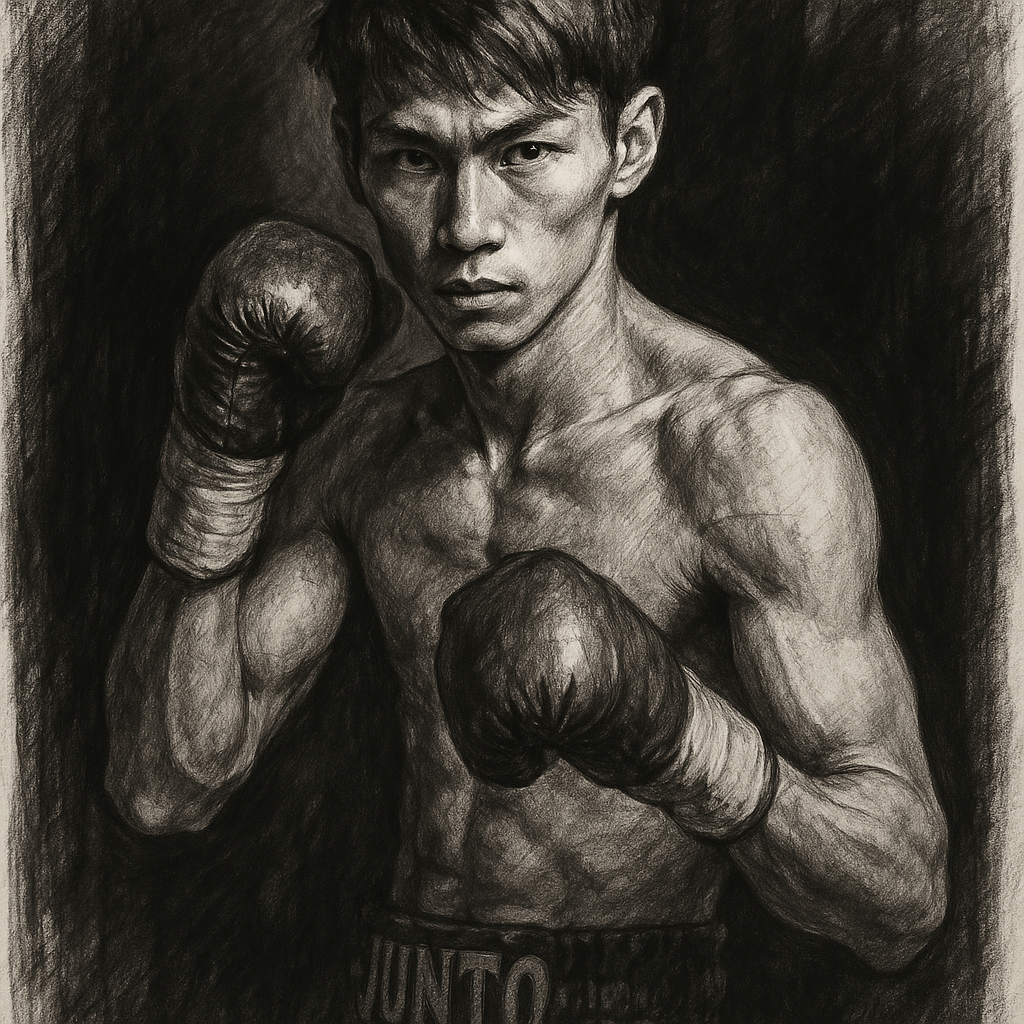
- Nakatani left the post-fight press conference early for hospital checks on a suspected orbital floor fracture
- The injury is most likely from the late-rounds uppercut barrage Inoue piled on after rounds eight and nine
- Recovery could be lengthy if surgery is needed — and it changes the entire shape of his next-fight conversation
Right then — Sunday morning, the kettle is on, and the headline coming out of the Tokyo Dome isn't a scorecard or a standing ovation. It's that Junto Nakatani left the post-fight press conference early to be checked at hospital for what Japanese media are reporting as a suspected orbital floor fracture. Make no mistake, that changes everything about the next twelve months for the man who walked into the Dome 32-0 and walked out 32-1 with his face already swelling closed.
I sat through the whole twelve-rounder twice last night. Once live, once with the sound off so I could just watch the work. Inoue won the rounds where you'd expect him to win them — the middle of the fight, the championship rounds, the moments where he stepped in behind that lead left and dug a right uppercut into the gap that Nakatani's high guard kept opening up. Those uppercuts in rounds eight, nine and the back end of the tenth — that's where the eye socket damage almost certainly happened. You could see Nakatani's right eye start to close from the eleventh onwards.
What An Orbital Floor Fracture Actually Means
Let's not beat around the bush — an orbital floor fracture isn't the kind of thing a man boxes through and shrugs off. The orbital floor is the thin sheet of bone that sits beneath the eyeball. When it cracks, the soft tissue around the eye can drop down into the maxillary sinus below. That gives you the classic sunken-eye look in the days that follow, double vision when you look up, and in the worst cases the eye muscles get trapped in the fracture line. Surgery isn't always required, but when it is, it's a plate-and-screws job and you're looking at three to six months minimum before sparring is even on the table.
For context — Vasiliy Lomachenko had an orbital fracture from the Lopez fight that needed surgery and he was out the best part of nine months. Joshua's eye socket damage from Usyk the second time around kept him out of the gym in any meaningful way for four months. The recovery curve isn't linear — you can be looking sharp on the pads two months in and then catch a stray jab in sparring and the whole thing reopens. That's the bit that worries me about a Nakatani 2026 calendar.
How Did The Eye Take That Much
Three things, in this order. First, the head clash in round four — the cut over Nakatani's right eye that the corner had to shut down between rounds — that's the moment the orbital area first took proper trauma. Second, the closed-guard stance Nakatani held for most of rounds five through seven, which meant the right uppercut Inoue spent the back half of the fight digging in landed flush on the cheekbone time after time after time. Third, the rounds-nine-to-eleven stretch where Inoue, sensing he had the man hurt, doubled down on the lead-hand-then-right-uppercut combination. By the end of the eleventh, Nakatani's right eye looked like a plum.
The corner did a class job to get him through the twelfth, which is why he was on his feet to take the unanimous decision and accept the verdict with the dignity you'd expect. But the second the cameras swung off him for the post-fight interview, you could see him sit down on the canvas edge and put his face in his hands. He knew. The doctors at ringside knew. By the time the press conference rolled around forty minutes later, the eye was already closing, the swelling had migrated down the cheek, and the call to head to hospital wasn't a precaution. It was the right call.
What This Does To His 2026
If the worst-case scenario plays out and Nakatani needs surgical repair, his 2026 ring schedule is finished. Best-case, conservative management, no surgery — you're still looking at six to eight weeks of strict rest, then a graduated return to training, then a fight maybe in October at the absolute earliest. Either way, the talk that was bubbling on Sunday morning of an immediate Inoue rematch in November or a move to Takuma Inoue at bantamweight to chase a different belt — all that has to wait. The eye decides the calendar now, not the negotiating table.
What I'd say is this — boxing has not lost Junto Nakatani. He fought the best super bantamweight on the planet to a competitive twelve-round decision in the biggest atmosphere any Japanese fighter has ever boxed in front of. He had Inoue holding on twice. He proved, beyond any reasonable doubt, that the gap between him and the Monster is paper-thin in any given exchange. The eye will heal. The lessons stay. He comes back better. He's twenty-eight years old, not thirty-four. There's plenty of fight left in him.
Inoue's Side — A Quiet Sunday
Inoue meanwhile spent Sunday morning, by all reports, with his family at the team hotel in Bunkyo. No press, no triumphant photo shoots, no immediate callouts. The "I'm relieved" line he gave at the post-fight told you most of what you needed to know about how mentally taxing the fight was even for the Monster. The Hearn-Alalshikh chatter about a Bam Rodriguez catchweight at the Pyramids in November is already moving — but Inoue himself has said he wants two more at 122 before the featherweight move. Wherever he goes next, he goes there with a Tokyo Dome night that's already entered Japanese boxing folklore.
One last thought. The image that'll stick with me from the Tokyo Dome wasn't the right uppercut in the ninth or the standing ovation at the final bell. It was Nakatani, head bowed, walking back to his corner after the cards were read, then turning and bowing — properly, slowly — to all four sides of the Dome. That's the Japanese boxing tradition the world doesn't always see. Class fighter. Class moment. Heal up.