HEAVYWEIGHT
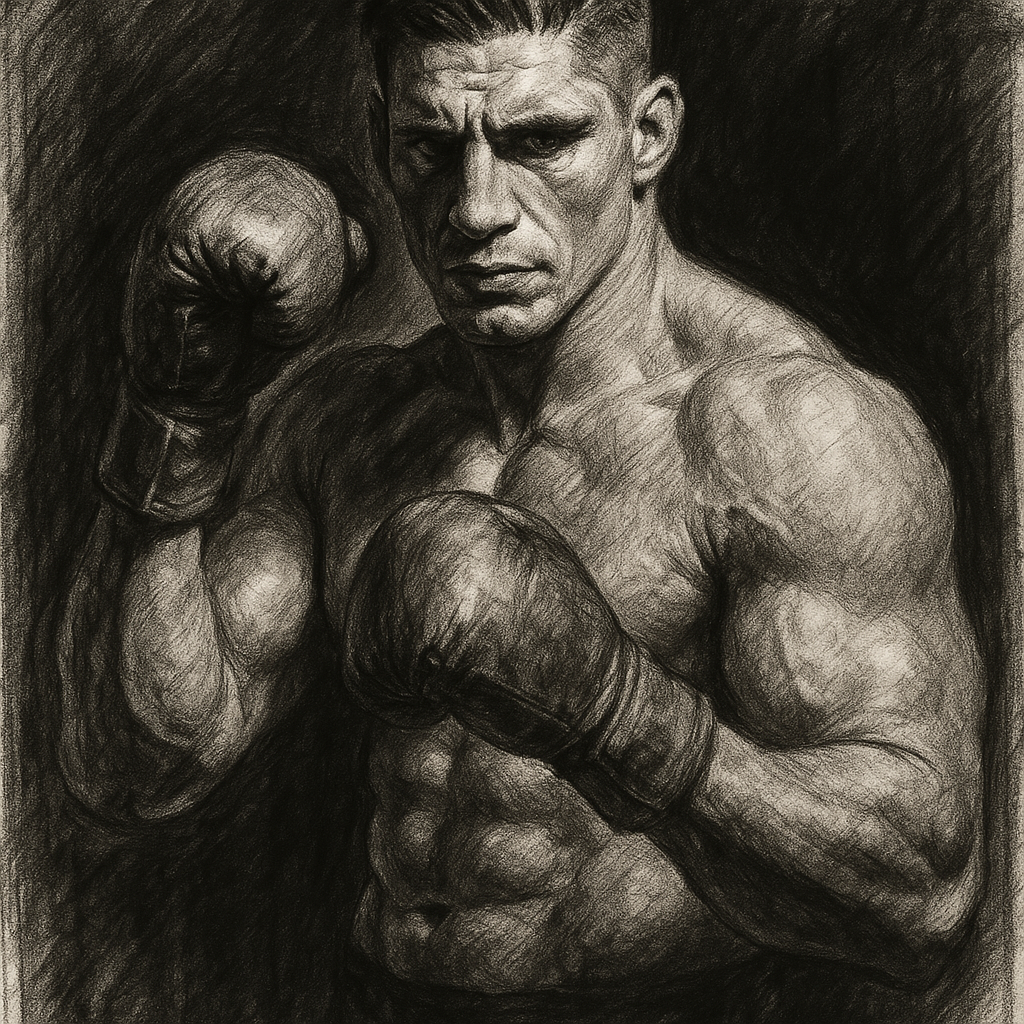
Verhoeven With Peter Fury In Egypt — Camp Notes Three Weeks Out From Usyk
Glory in Giza lands on May 23 and the kickboxer trying to do what nobody has done — beat Oleksandr Usyk in a boxing ring — has spent the last three months in a Peter Fury training camp built around one idea. Lateral movement, lateral movement, lateral movement.
By Luke Parker • 6 May 2026
- Rico Verhoeven has now been with trainer Peter Fury for fifteen weeks of camp, with the final block running in Egypt for acclimatisation in the lead-up to May 23
- The camp focus has been almost entirely defensive — lateral footwork, southpaw sparring, and parrying — with hand-speed adjustments running second to the survival work
- Verhoeven's professional boxing record reads 0-0; Usyk's reads 24-0 with two heavyweight undisputed runs and the WBC strap currently on his shoulder
Right Then — The Boxing Test Of Verhoeven's Career
Right then, three weeks out from the strangest title fight of 2026 and we're getting our first proper read on what
Rico Verhoeven's training camp has actually looked like. The Glory kickboxing legend has been in Manchester, in the Netherlands, and now in Egypt with Peter Fury, the trainer who took on the assignment back in February with a three-month commitment and what was clearly always going to be a defensive-first build-up.
Make no mistake, this is the hardest assignment of Verhoeven's career, and it might be the hardest assignment of Peter Fury's coaching career too. Verhoeven is the best heavyweight kickboxer of his generation. He held the Glory heavyweight title for eleven straight years and 4,200-plus days. He has 64 professional kickboxing wins. His professional boxing record is 0-0.
Oleksandr Usyk's professional boxing record is 24-0 with two undisputed heavyweight runs and an Olympic gold above that.
What Peter Fury Has Built
Peter Fury said it plainly when he took the job in February: "We're not going to make a boxer of Rico in three months. What we can do is teach him to survive twelve rounds against the best heavyweight in the world, and put him in positions where his power is the variable that decides things." That's a defensive-first philosophy, and the camp footage that has emerged in the last four weeks reads exactly like it.
The drills shown on social media are almost entirely lateral movement — Verhoeven circling left and right against southpaw sparring partners, finding the angle, and then leaving. Not engaging. Not exchanging. Leaving. That's the Peter Fury hallmark — when you're the bigger, slower man with less boxing IQ, you do not stand and trade. You move, parry, reset, move.
The southpaw sparring is the most important piece. Usyk is a southpaw. Verhoeven has spent his entire career fighting orthodox kickboxers, with the occasional southpaw kicker mixed in but rarely a southpaw of Usyk's calibre. Peter Fury's camp has reportedly featured three or four full-time southpaw sparring partners across the fifteen weeks of work, all of them brought in specifically to mimic Usyk's footwork patterns and the angle he creates with the right-hand jab.
The Egyptian Block — Why It Matters
The final two weeks of camp are in Egypt, and that's not for marketing. The Pyramids site in Giza is open-air, the May temperature in the desert reaches 35-37C in the late afternoon, and the ring will be exposed to wind, sand-laden air, and altitude variation that is meaningfully different from any indoor European venue. Both camps are running acclimatisation blocks for that reason, but the bigger man — Verhoeven — has more body mass to manage in the heat, and he's the one who needs the longer block.
From the Usyk side, the camp has reportedly been even more disciplined. Eleven-kilometre runs, four sessions a day, southpaw sparring with European heavyweight prospects who can hit a bit. Usyk's coach has talked publicly about the Ukrainian preparing exactly the way he prepared for the second Fury fight — not as a reach for a final career fight, but as a man who knows that one bad round against a man with Verhoeven's power could end the night and the WBC reign.
What Verhoeven Has To Do — And What He Can't
Right, predictions territory, because I never sit on the fence. Verhoeven's path on the night is impossibly narrow but it is not impossible. He's got to do four things, in this order: survive the first three rounds without taking a clean shot, force Usyk to respect the right hand by landing it once in round four or five, drag the fight into the deep waters of rounds eight, nine and ten where his cardio is properly elite even by heavyweight standards, and find one moment in the last quarter of the fight where Usyk plants the front foot for half a second too long.
Make no mistake, that path requires Verhoeven to be the better fighter for one and a half rounds across forty-eight minutes. That is not a serious basis on which to predict an upset.
Usyk at 175 was untouchable. Usyk at heavyweight is the most complete heavyweight of his generation. The version of Usyk who beat
Fury twice and
Joshua twice and dispatched
Dubois at Wembley is operating at a level that even other world champions at the weight don't reach.
And that's before you factor in the boxing IQ gap. Verhoeven knows he has fifteen weeks of pure boxing in his legs. Usyk has fifteen years.
Luke's Prediction
Usyk by stoppage, round eight. The first three rounds are a reasonably competitive feeling-out — Verhoeven walks in, Usyk circles, the Dutch heavyweight gets to half-respectable distance once or twice and lands a body kick — sorry, body shot — that gets the Egyptian crowd up. Through the middle rounds Usyk starts cutting the ring, the southpaw jab is reading the timing of every Verhoeven step-in, and the right hook finds its home in round seven. The eighth is the one where Verhoeven's legs go and the referee jumps in with the kickboxer absorbing without answering.
The respectable case for Verhoeven, if you want one, is a points loss with him standing at the bell having gone twelve rounds with a man at the absolute peak of the heavyweight era. That outcome would be a triumph for the Verhoeven brand and for Glory, and it would be a triumph for Peter Fury as the coach who built it. It would not be a win, but in this sport not all losses are equal.
What Comes After Glory In Giza
The medium-term picture for both men is interesting.
Usyk is, almost certainly, fighting a maximum of two more times. Verhoeven is the soft assignment of those two, with the Joshua-Fury winner, or whoever holds the WBC mandatory slot post-Wardley-Dubois, the harder one. Verhoeven, win or lose, has done what he came to do — proved he could compete at heavyweight boxing level without embarrassing himself, and opened the door for crossover fights with the next generation of heavyweights.
The unspoken third character in this story is Peter Fury. If Verhoeven goes twelve rounds and gives a credible account, Peter Fury's reputation as the man who can teach a kickboxer to survive against the best heavyweight in the world becomes a coaching career-changing line on his CV. If Verhoeven gets stopped early, the boxing world will say what the boxing world always says — kickboxers don't translate.
Right then. May 23. Giza. Three weeks out, and the kickboxer is still in camp. Boxing has had stranger main events. Not many. Don't miss it.