BOXING POLITICS
Ali Walsh And De La Hoya Lead The Senate Revolt On The Ali Act
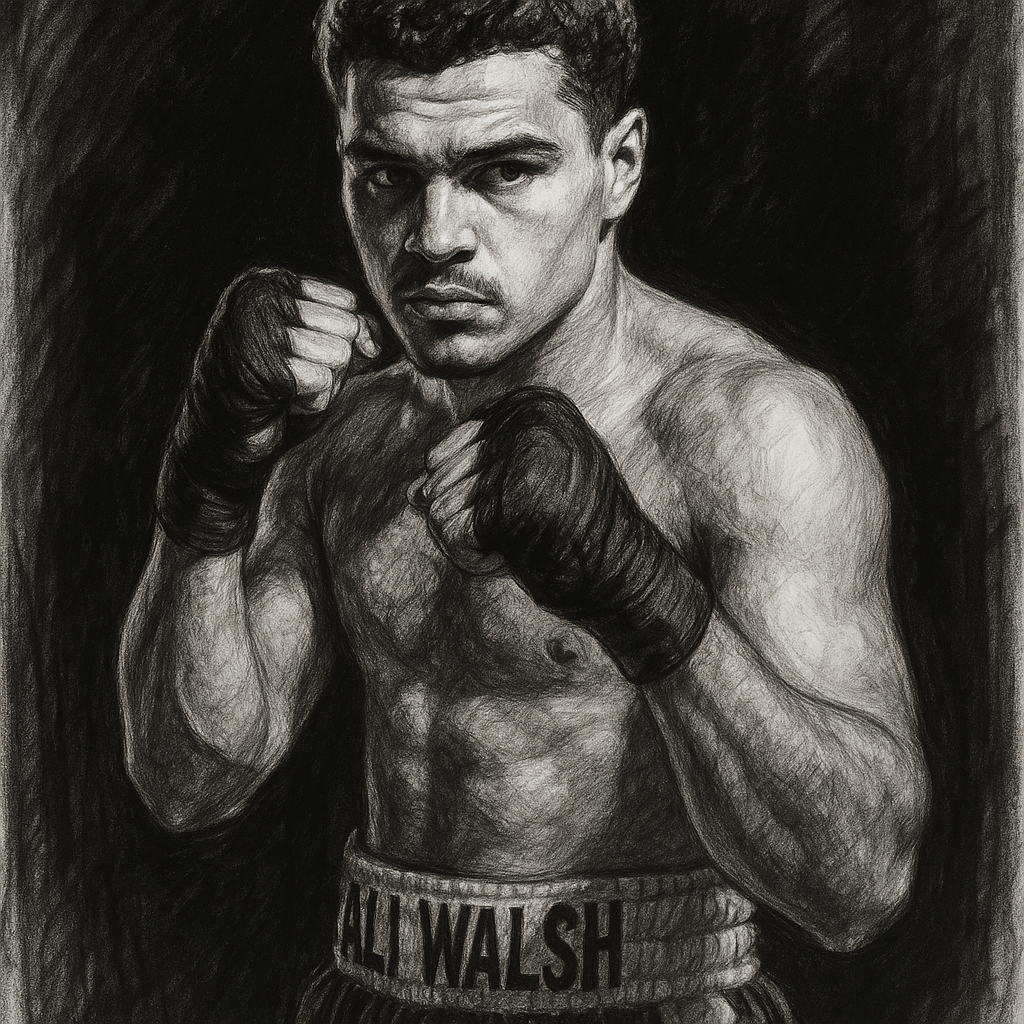
Nico Ali Walsh and Oscar De La Hoya sat in front of the Senate Commerce Committee yesterday and ripped the Muhammad Ali American Boxing Revival Act to pieces. Nick Khan of WWE/TKO was the only witness to defend it. Florida commission chief Timothy Shipman stayed neutral. Right then — the revival bill just walked into the buzzsaw, and Ted Cruz's chances of slipping this through the Senate the way the House waved it through have taken a proper hit.
By Luke Parker • 23 April 2026
Boxing Lookout
- Nico Ali Walsh told the Senate the bill should not carry his grandfather's name in its current form — a devastating moment from the only active pro on the panel
- Oscar De La Hoya called the bill "a fundamental shift in power that would put corporate profits first and fighters second," and drew a direct line between Zuffa's Saudi funding and LIV Golf's sportswashing model
- Nick Khan stood alone defending the bill, arguing the UBO sits alongside the existing Ali Act as "an added option" — a position the committee didn't appear to buy
Why Yesterday Mattered
Make no mistake, the Senate Commerce Committee hearing on H.R. 4624 — the Muhammad Ali American Boxing Revival Act — was the most important piece of political boxing theatre in a generation. The House has already passed the bill. The only thing standing between the Unified Boxing Organization and federal law is the Senate. And yesterday in Washington, the witnesses Ted Cruz called to the stand delivered a verdict that wasn't remotely what his office would have wanted.
Our
preview piece laid out what was on the table. A new sanctioning body, absorbed into promotion, under one corporate structure. Zuffa Boxing, backed by Turki Alalshikh and Saudi PIF money, as the obvious beneficiary. The existing Ali Act, which separates promoters from sanctioning bodies, bypassed. That's the reform. That's the revival. That's what the witnesses were asked to back or bury.
Three of the four buried it.
Nico Ali Walsh — The Moment Of The Day
If you know, you know — when the grandson of Muhammad Ali sits in front of a Senate committee and says the bill with his family name on it betrays his grandfather's legacy, that's not an argument. That's a verdict. Ali Walsh, the only active professional on the witness list, didn't hedge.
"The Reform Act was built on a simple principle: the people controlling fighters should not also control the entire marketplace," he told the committee. He went further, telling the senators that if the bill passed as written, "it should not have my grandfather's name on it, as it would betray the principles his Act was created to protect."
That is an extraordinary thing for a 26-year-old pro to say. Ali Walsh isn't a promoter with a business to protect. He's not a commissioner with a job to defend. He's a fighter, and the grandson of the fighter whose name is literally on the bill. For him to sit there and tell Cruz's committee that the legislation is a betrayal — that's a line the reform crowd can't step around.
Expect Ali Walsh's testimony to be quoted back at every senator who votes for this in the weeks ahead. He's just made this personal, and he's made it in the most quotable way possible.
De La Hoya — The Saudi Sportswashing Line
Oscar De La Hoya came in with the same message, but a sharper political edge. The Golden Boy chief has a business reason to oppose Zuffa — his promotional outfit is directly threatened by the UBO model. But De La Hoya framed it bigger than Golden Boy, and he framed it in a way designed to make Senate Republicans uncomfortable.
"This is a fundamental shift in power that, if enacted, would put corporate profits first and fighters second," he said. Then he went for Zuffa directly, comparing its Saudi-backed model to LIV Golf's disruption of the PGA Tour. The word he didn't quite say but clearly meant was sportswashing — and in front of a Senate committee in 2026, that lands.
Let's not beat around the bush, this is the most effective political framing we've seen yet against the bill. Zuffa Boxing is funded by Saudi money. The UBO would hand enormous market power to the company Saudi money has built. De La Hoya's job yesterday was to make sure every senator knew that, and he did it without overplaying the card.
Nick Khan's Solo Act
Nick Khan, WWE president and a TKO Group executive, was the only witness defending the bill. His line was narrower than you'd expect from the Zuffa side: he framed the UBO as additive rather than replacement. "The existing Act, as it currently stands, would remain in place. This is an added option," he told the committee.
That's a smart rhetorical move — it takes the sting out of the "destroying the Ali Act" attack. But it didn't land, and it's easy to see why. If the UBO offers bigger purses, bigger platforms, and direct pipelines to Zuffa cards in Riyadh, why would anyone choose to stay outside it? The "added option" defence only works if the UBO doesn't swallow the market. The whole point of the model, for Zuffa, is that it does swallow the market. Khan was asked to thread a needle that doesn't exist, and you could see it.
By the end of his segment, Khan was the lone voice in the room defending the legislation. That is a bad optic for any bill going into a Senate vote.
Shipman — The Neutral Card
Timothy Shipman, the Florida commission chief and ABC president, did what commissioners tend to do in hearings: he talked about safety standards and implementation, and he stayed out of the structural fight. "The provisions in this legislation align with and in many cases exceed the standards we have in Florida," he said.
That's not an endorsement of the UBO. That's saying "if this passes, we can live with the safety rules." Shipman's silence on the sanctioning-body question is, in itself, a signal. Commissioners don't want to go on record backing a framework that concentrates market control with a single promoter, because they know what that means for state-level oversight. Shipman played that perfectly.
Cruz Ringing A Bell — The Tone
Ted Cruz opened the hearing by ringing a bell and introducing the witnesses like a ring announcer. Fine, it's light theatre. But the tone was telling — Cruz was treating this like a showpiece, not a serious legislative hearing. That might have worked if his star witnesses had delivered. They didn't. Cruz spent the rest of the session on the back foot, with three of the four witnesses telling him the bill he wants to pass is fundamentally flawed.
Brilliant political theatre from the other side. The ring-announcer opener turned into a backdrop for a unified rejection. Not what the chairman ordered.
Where This Goes Now
Here's Luke's take, and let's not sit on the fence. The bill as currently drafted is in proper trouble. It'll still pass the House version through the chamber, but the Senate won't rubber-stamp it after yesterday. Cruz will need to rewrite. Expect a revised version that keeps the UBO concept but scales back the sanctioning-body piece, or adds stronger anti-trust protections. Expect Ali Walsh's testimony to be quoted in every op-ed between now and the markup.
And expect Zuffa's political team to work overtime. They've already booked the biggest fight card of the year with
Canelo–Crawford II in Riyadh on September 19. They're about to deliver
Usyk–Verhoeven in Egypt. They have momentum on the fight-making side. What they don't yet have is the federal legislative cover they wanted. Yesterday, that cover cracked.
The Muhammad Ali American Boxing Revival Act, as written, is not the law of the land. Yet. But the grandson of Muhammad Ali has just told the Senate it shouldn't be.
The Verdict
Ali Walsh was the witness of the day. De La Hoya was the tactician. Khan was the corporate voice stranded on an island. Shipman played the neutral. Cruz got a result he didn't want, in a hearing he chose to stage. The reform push isn't dead — it's too well-funded to die — but the political weather has changed. If this bill becomes law in 2026, it will not be the bill that was laid before the Commerce Committee yesterday. It will be something more cautious, more negotiated, and with a lot more fighter protection stitched in. That's a win for the sport. That's a win for fighters. And that, frankly, is exactly what a hearing like this is meant to deliver.