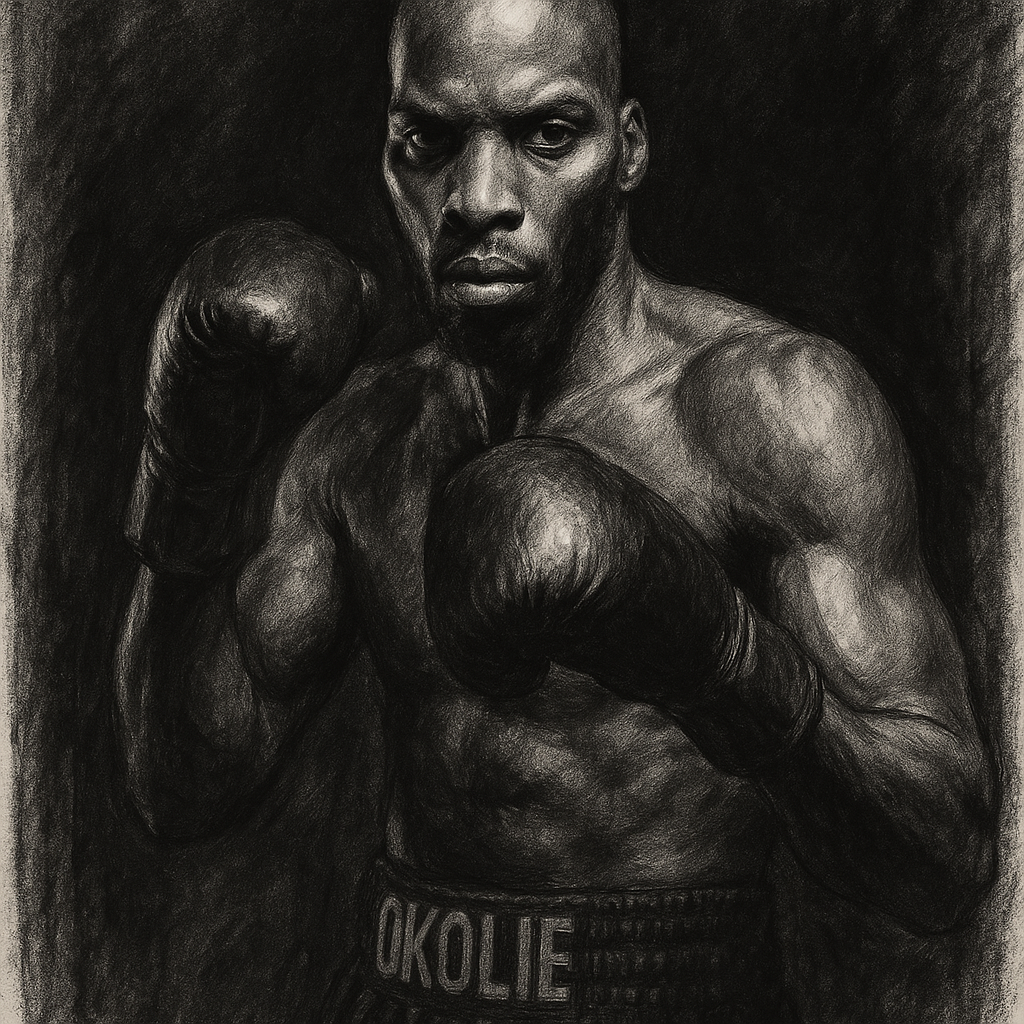
- Lawrence Okolie has publicly explained his adverse VADA finding — the substance was GHRP-2, a growth hormone releasing peptide, banned at all times under WADA code
- Okolie says the substance entered his system via treatment for an elbow injury sustained during camp for the cancelled Tony Yoka fight
- Under WADA rules, Okolie faces a ban of up to four years unless he can prove he bore no significant fault — the burden of proof sits with him
- The Queensberry Paris card has been cancelled in full; David Adeleye's offer to step in at short notice has been put on the shelf
Right then. Lawrence Okolie has given his side of the story, and the headline is this: the banned substance in his adverse VADA finding was GHRP-2, a growth hormone releasing peptide, and it arrived in his system, he says, via medical treatment for an elbow injury picked up during training camp for Tony Yoka.
That is the line. That is the defence. And if you're reading that thinking it sounds awfully convenient, well, you are not alone.
What GHRP-2 Actually Is
Make no mistake about the substance involved. GHRP-2 is a synthetic peptide designed to stimulate the pituitary gland to release more of the body's own growth hormone. It sits squarely on the WADA prohibited list under class S2 — peptide hormones, growth factors and related substances — and it is banned at all times, not just in competition. It is not a painkiller. It is not an anti-inflammatory. It is a performance enhancer whose primary recreational use is by bodybuilders trying to push past a plateau.
The idea that a specialist sports medicine clinician would administer GHRP-2 to treat an elbow injury in a professional boxer who is subject to VADA testing is, to put it politely, a stretch. There are dozens of legitimate, WADA-compliant options for tendinitis, joint inflammation, or soft tissue damage. Cortisone injections, anti-inflammatories, even PRP in controlled circumstances. GHRP-2 is not in that toolkit, because it would light up a drug test like a Christmas tree.
The Burden Of Proof Sits With Okolie
Here's where it gets grim for Lawrence. Under the WADA code, the presence of a banned substance in a sample is enough for a violation. Okolie does not need to have intended to cheat. He does not need to have benefited. The burden of proving how it got there, and proving that he bore no significant fault, sits with him.
A four-year ban is the standard starting point. To reduce that, Okolie will need to produce medical records, supplier invoices, clinician statements, and ideally a product contamination report showing the substance was present in something he legitimately ingested. That is a high bar. And the WBC have shown in recent years that they do not hand out benefit of the doubt lightly.
For a 33-year-old heavyweight already looking to rebuild his career after the Emmanuel Tshifunda stoppage and the move up from cruiserweight, this is close to catastrophic. Even if he eventually produces the paperwork and beats the ban, the reputational damage is the kind of thing that follows a fighter for the rest of his days. Fair or not.
The Knock-On Effect — Paris Card, Adeleye, Yoka
The immediate casualty is the entire Queensberry Paris card, which was wiped out once Okolie's result came back. Tony Yoka's home date, his first big promotional push in France for years, is gone. David Adeleye had put his hand up publicly to step in, which said a lot about Adeleye's confidence and even more about how dangerous a short-notice Yoka fight would have been for him. None of that matters now. The show is off.
For Yoka specifically, this is a brutal setback. He had trained through camp, was ready, and now has nothing to show for it. Expect Queensberry to move quickly on a rescheduled date — either a rebuilt Paris card in the summer, or a slot on another European show later in the year. He is still a valuable asset at heavyweight and he was not the one who failed the test.
The Political Picture — UKAD, The WBC, And What Comes Next
UKAD will be involved in the sanctioning process because Okolie is a British-licensed fighter. VADA handle the testing itself, but the governing bodies run the hearings. Expect a B-sample test to confirm the A-sample finding. If that also comes back positive, Okolie moves straight into provisional suspension.
His legal team will then try to build the "no significant fault" case. Unless they produce an absolute smoking gun — a contaminated supplement batch test, a clinician willing to go on record about a prescription — the ban will land. Whether it is two years, three, or the full four depends on how plausible the panel finds the story. On current evidence, I would not be confident of anything under three.
For now, the substance is named, the excuse is on the table, and the clock is ticking. If the GHRP-2 came from a treatment, Okolie has to prove it. If it did not, he has to face the consequences. Either way, the Paris card is dead, Yoka is out of pocket, and the Queensberry heavyweight plan for the spring has just had a very large hole kicked through it.